Goldari
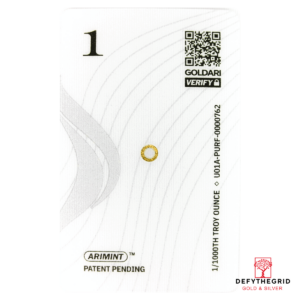
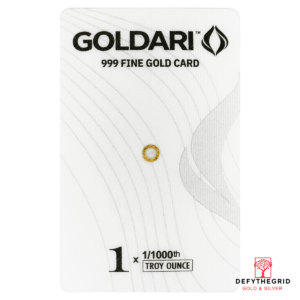
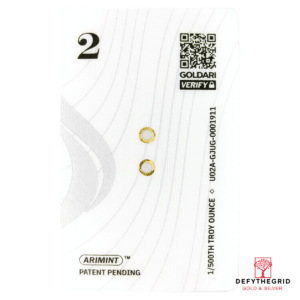
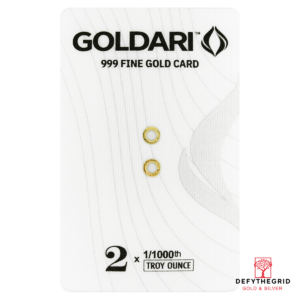
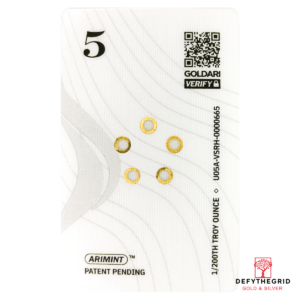
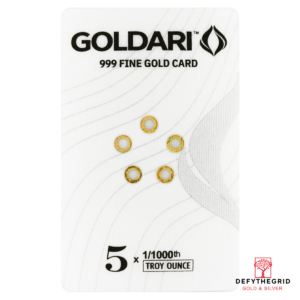
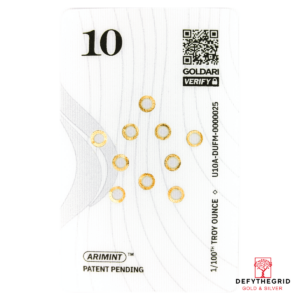
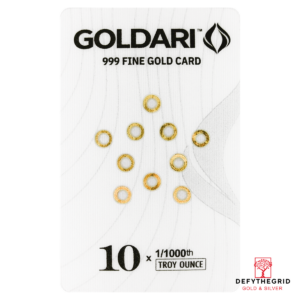
Goldari Gold Cards contain physical .999 fine gold in compact, wallet-sized cards. Manufactured by Arimint, Goldari is available in 1, 2, 5, and 10 denominations, with each unit representing 1/1000 troy ounce of gold. Every card features individually serialized identification and optical verification features.
Read More About Goldari
What Are Goldari Gold Cards?
Goldari is a fractional-gold product manufactured by Arimint. Instead of packaging gold in a conventional coin or bar, Goldari incorporates physical gold rings into a portable card.
Goldari cards are designed for people interested in owning, collecting, and potentially exchanging very small quantities of physical gold. The denominations are standardized by gold content, making it straightforward to compare one card with another.
Each Goldari unit represents 1/1000 troy ounce of .999 fine gold. A 10 Goldari card therefore contains ten times the gold of a 1 Goldari card.
How Much Gold Is in Each Goldari?
Goldari is currently offered in four denominations. The total gold content increases with the denomination.
| Goldari | Gold Rings | Gold Content | Decimal Troy Oz |
|---|---|---|---|
| 1 Goldari | 1 | 1/1000 oz | 0.001 oz |
| 2 Goldari | 2 | 1/500 oz | 0.002 oz |
| 5 Goldari | 5 | 1/200 oz | 0.005 oz |
| 10 Goldari | 10 | 1/100 oz | 0.010 oz |
These weights describe the gold content of each card, not the total weight of the card itself.
Are Goldari Cards Real Gold?
Yes. Goldari cards contain physical .999 fine gold in the form of embedded gold rings. They are not simply printed representations of gold or certificates promising future delivery of gold.
Their physical gold content has an intrinsic metal value that changes with the market price of gold. The card's selling price can also reflect manufacturing, distribution, and retail premiums.
Goldari Serial Numbers and Authentication
Goldari cards feature individual serial numbers and an optical verification system intended to help authenticate their embedded gold rings.
Serialization helps distinguish one card from another, while optical verification provides an additional way to examine product authenticity. Buyers should follow the manufacturer's current verification instructions rather than relying on appearance alone.
These features are intended to discourage counterfeiting, but no authentication system should be treated as an absolute guarantee.
Goldari vs. Goldbacks
Goldari and Goldbacks both make extremely small amounts of physical gold available in standardized denominations, but the products have different constructions and designs.
Goldari incorporates gold rings into wallet-sized cards. Goldbacks contain thin layers of gold within protective polymer currency-style notes, often featuring regional artwork.
A 1 Goldari and a 1 Goldback each represent 1/1000 troy ounce of gold. That does not mean they necessarily have the same retail price, resale value, collectibility, or merchant acceptance.
You can also shop Goldbacks at DefyTheGrid to compare available denominations and products.
Goldari vs. Gold Coins and Bars
Traditional bullion coins and bars often provide a lower premium per ounce when purchased in larger quantities. Goldari emphasizes small, standardized amounts of physical gold and portable packaging.
Buyers focused primarily on obtaining the greatest gold weight for their money should compare premiums against traditional bullion. Buyers prioritizing fractional units, portability, or collectibility may find Goldari interesting.
How Is Goldari Melt Value Calculated?
The intrinsic gold value of a Goldari card is based on its gold content and the current market price of gold.
Gold value = Gold spot price per troy ounce x Goldari denomination / 1000.
For example, the metal value of a 5 Goldari card equals the current gold spot price multiplied by 0.005. Actual buying and selling prices may differ from melt value.
The premium over spot represents the difference between the card's selling price and the market value of the gold it contains.
Can Goldari Be Used for Trading or Barter?
Goldari's small denominations may make it useful for voluntary exchanges between willing parties. However, Goldari is not U.S. legal tender, and no merchant or individual is obligated to accept it as payment.
Anyone considering using Goldari in an exchange should agree on its value and acceptance beforehand.
Frequently Asked Questions About Goldari
What is one Goldari worth?
One Goldari contains 1/1000 troy ounce of .999 fine gold. Its intrinsic gold value changes with the spot price of gold, while its retail price may include a premium.
Is Goldari made of 24-karat gold?
Goldari is described as containing .999 fine gold, corresponding to approximately 24-karat purity. The surrounding card material is not made of gold.
How much gold is in 10 Goldari?
A 10 Goldari card contains 1/100 troy ounce, or 0.010 troy ounce, of .999 fine gold distributed across ten gold rings.
Can you verify a Goldari card?
Goldari cards have individual serial numbers and optical verification features. Follow Arimint's current verification procedures when authenticating a card.
Are Goldari cards a good investment?
Goldari provides exposure to physical gold, but its purchase premium matters. Buyers should compare the total cost, intrinsic gold value, potential resale options, and their reasons for owning fractional gold.
Where can I buy Goldari?
DefyTheGrid lists the 1, 2, 5, and 10 Goldari Gold Cards on this page. Product availability and prices are shown in the individual listings.
Shop Goldari by Denomination
Explore the individual Goldari Gold Cards below:
Showing all 4 results